How to read a food label for allergies: a 5-step check
Check five things on every package: 1. the ingredient list, 2. allergen names in brackets, such as "whey (milk)", 3. the "Contains" statement, 4. any "may contain" or facility warning, and 5. whether the product is even covered by US allergen labeling. Do it every time you buy, because recipes change.
1. Read the full ingredient list
Read every ingredient, not just the first few. Ingredients are listed by weight, so allergens used in small amounts, like a flavoring or an emulsifier, are often near the end.
2. Look for allergens in brackets
US law lets manufacturers name the allergen source in brackets after an ingredient: "lecithin (soy)", "flour (wheat)", "natural flavor (sesame)". These are easy to miss in small print.
3. Find the "Contains" statement
Many labels add a line right after the ingredients, such as "Contains: milk, soy." If a package uses one, every major allergen in the product has to be in it. It's a useful summary, but it's optional: a product can name allergens only in brackets and have no Contains line at all.
4. Check advisory warnings
"May contain", "may contain traces of" and "produced in a facility that also processes" are voluntary. They describe possible cross-contact, not an ingredient. Decide in advance how you'll treat them. See what "may contain" means.
5. Ask: is this product covered?
Allergen labeling law doesn't cover everything. Meat and poultry products, most alcoholic drinks, highly refined oils and food wrapped after you order it are outside the FDA's allergen labeling rules. For these, read ingredient names carefully and ask staff when in doubt.
Every time, not just the first time
Manufacturers change recipes and suppliers. A product that was fine last month may not be now, so check the label at every purchase.
Doing this faster with SafeScan
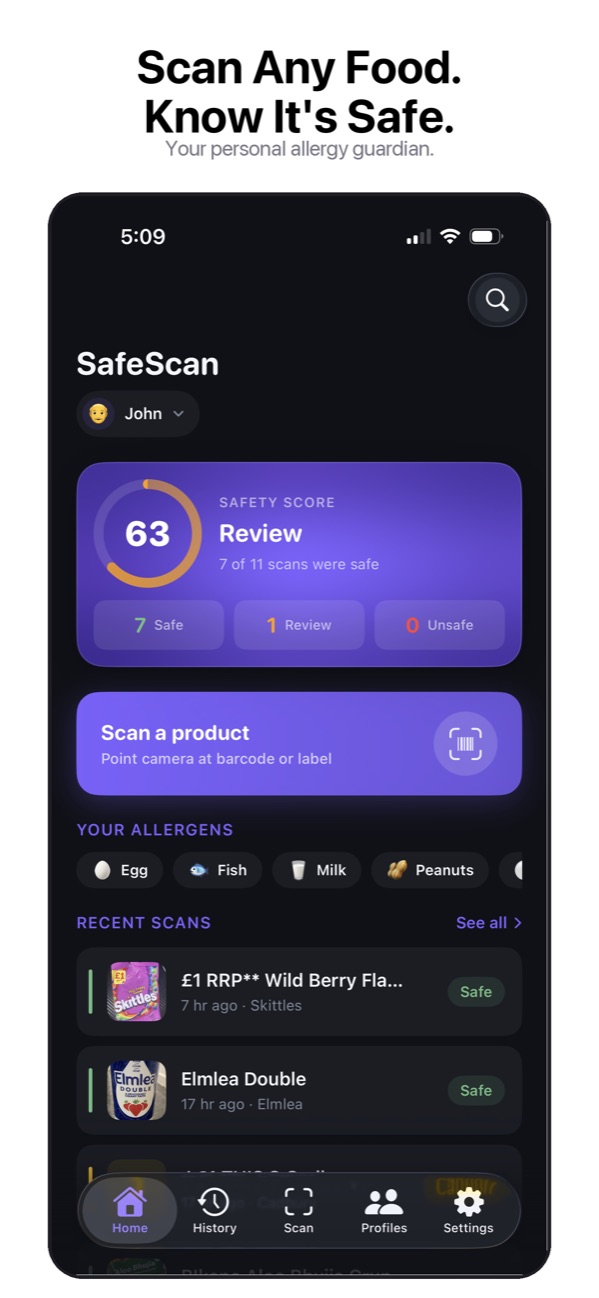
SafeScan reads the same five things. It separates the ingredient list, the Contains statement, "may contain" warnings and "free from" claims, matches every ingredient against more than 1,000 allergen names, and gives you a verdict with an explanation. Scan the label on the package in your hand for the most accurate result.
This guide is general information based on US labeling rules, not medical advice. Talk to your doctor or allergist about your own allergies, and always read the label on the package in your hand.
Let SafeScan run the check
Scan the barcode or photograph the label, and SafeScan reads the ingredient list, the Contains statement and any "may contain" warning separately, then checks them against your profile and explains what it found.
Download on the App StoreFree to download for iPhone and iPad. No account needed, and your profiles and scan history stay on your device.
Frequently asked questions
If a product has no Contains statement, is it allergen-free?
Not necessarily. The law allows the allergen to be named in brackets inside the ingredient list instead. Read the whole list.
Do I need to check products I've bought before?
Yes. The FDA notes that a product's ingredients can change at any time and recommends checking the label every time you buy it, even if you've eaten it before without a reaction.
What should I do if a label is unclear?
Contact the manufacturer or distributor named on the package, as the FDA recommends. If you're still unsure, don't eat it.