The 9 major food allergens (US): what labels must show
The 9 major food allergens in the US are milk, eggs, fish, crustacean shellfish, tree nuts, peanuts, wheat, soybeans and sesame. Sesame became the ninth on January 1, 2023. On most packaged foods, the label must name the allergen source either in brackets after the ingredient, such as "whey (milk)", or in a "Contains" statement next to the ingredient list.
The list
The Food Allergen Labeling and Consumer Protection Act of 2004 (FALCPA) named eight major food allergens. The FASTER Act added sesame as the ninth, effective January 1, 2023.
| Allergen | Notes |
|---|---|
| Milk | Includes ingredients made from milk, such as whey and casein |
| Eggs | |
| Fish | The species must be named, for example bass, flounder or cod |
| Crustacean shellfish | The species must be named, for example crab, lobster or shrimp |
| Tree nuts | The type must be named, for example almonds, walnuts or pecans |
| Peanuts | |
| Wheat | |
| Soybeans | |
| Sesame | Major allergen since January 1, 2023 |
When FALCPA passed, the FDA says the original eight accounted for 90 percent of food allergies and serious allergic reactions in the US.
How labels must show them
The law requires the food source of every major allergen to be named at least once, in one of two ways:
- In brackets after the ingredient: "lecithin (soy)", "flour (wheat)", "whey (milk)".
- In a "Contains" statement right after or next to the ingredient list: "Contains wheat, milk, and soy."
If the ingredient's usual name already says it, such as "buttermilk", nothing more is needed.
Where the rules don't apply
FALCPA covers most packaged foods, including dietary supplements. According to the FDA, it does not cover:
- Meat, poultry and certain egg products, which the US Department of Agriculture regulates
- Most alcoholic drinks
- Raw agricultural products, such as fresh fruit and vegetables
- Highly refined oils
- Food put in a wrapper or box after you order it, like a sandwich at a deli counter
These are the places where knowing an allergen's other names matters most. See our guides to hidden names for milk, egg, wheat and soy.
What labels don't have to tell you
"May contain" and "made in a facility with" warnings are voluntary. A product without one isn't guaranteed to be free of cross-contact. Read what "may contain" means.
Checking the 9 with SafeScan
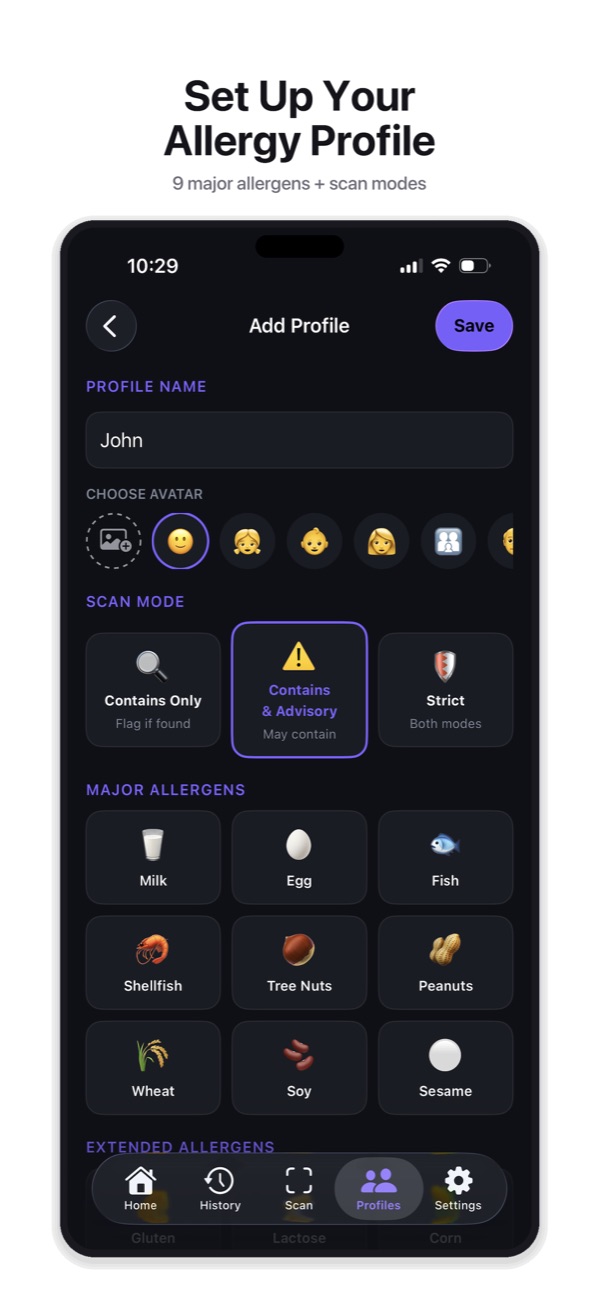
SafeScan's allergy profile starts with these nine. Scan a barcode or the ingredient label and every ingredient is checked against the allergens you picked, including the bracketed source names and the "Contains" statement, with a Safe, Caution, Review or Unsafe verdict and the reason.
This guide is general information based on US labeling rules, not medical advice. Talk to your doctor or allergist about your own allergies, and always read the label on the package in your hand.
Check all 9 in one scan
Pick your allergens once and SafeScan checks every ingredient on every product against them, including derived ingredients like whey and casein. Add extended allergens such as mustard or sulfites, and diets like halal or vegan.
Download on the App StoreFree to download for iPhone and iPad. No account needed, and your profiles and scan history stay on your device.
Frequently asked questions
Are mollusks like clams and squid a major allergen?
Not under US law. Only crustacean shellfish, such as crab, lobster and shrimp, are a major food allergen. Mollusks can still cause reactions, so add them to your profile if you avoid them. SafeScan lists mollusks as an extended allergen.
Is gluten one of the 9 major allergens?
No. Wheat is a major allergen, but gluten is also found in rye and barley, which aren't. Gluten-free claims are covered by a separate FDA rule. See what "gluten-free" means on a label.
Does the FDA set a safe threshold for allergens?
No. The FDA says it has not established a threshold level for any allergen.