Sesame allergy: what changed on US food labels in 2023
Since January 1, 2023, sesame is the ninth major food allergen in the US, so packaged foods must declare it, including when it's part of "natural flavor" or a spice mix. Products already on shelves before 2023 didn't have to be relabeled, so the FDA advises caution. Other names for sesame include tahini, benne seeds, gingelly oil and til.
What changed
The FASTER Act made sesame the ninth major food allergen. Since January 1, 2023, all FDA allergen labeling rules apply to it, the same as milk or peanuts. Sesame must be named either in brackets, such as "spices (sesame)" or "natural flavor (sesame)", or in the "Contains" statement.
The FDA says sesame always had to be listed when it was an added ingredient. What's new is that it must be named as sesame even when it's part of another ingredient like a flavoring or spice blend, and it must appear in any "Contains" statement.
Why some labels still don't mention it
Products that were already on their way to stores, or in stock, before 2023 didn't have to be removed or relabeled. Some packaged foods have a long shelf life, so the FDA advises caution during this transition. If you're not sure, contact the manufacturer.
Other names for sesame
- Tahini (sesame paste)
- Halvah or halva
- Benne seeds
- Gingelly oil
- Til and til oil
- Sesame oil, sesame flour, sesame paste
Some foods usually contain sesame without saying so in their name, such as hummus, which is typically made with tahini.
Check sesame with SafeScan
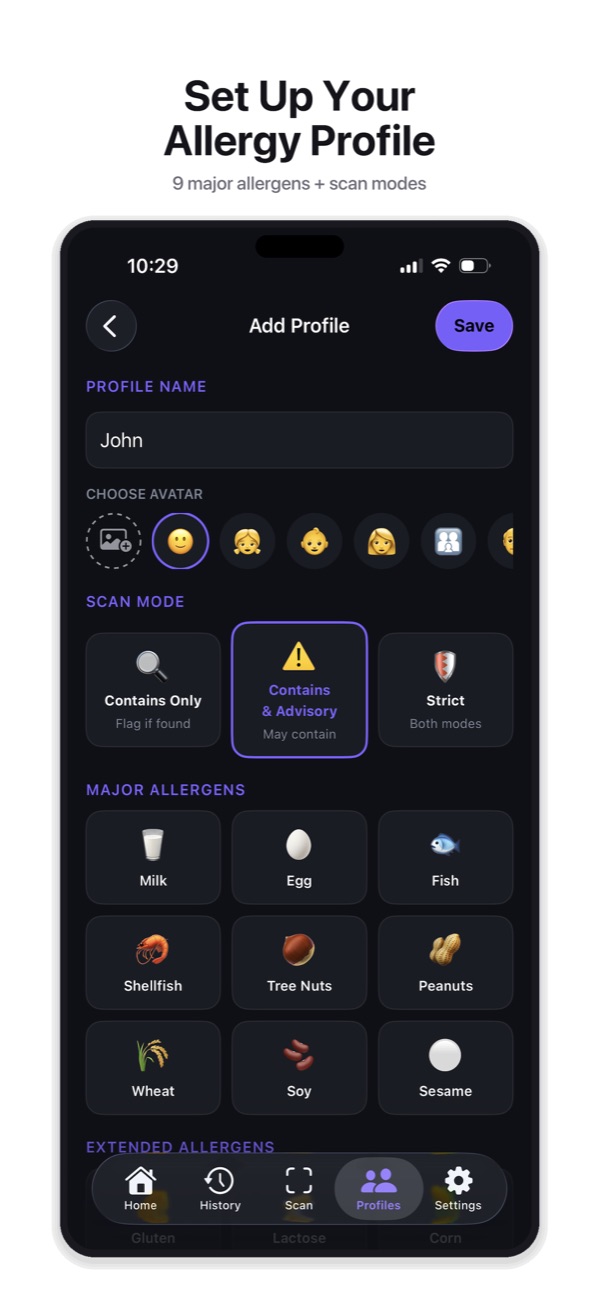
Add sesame to your profile and SafeScan matches all of these names, reads the "Contains" statement, and flags "may contain sesame" warnings if your sensitivity mode includes advisory labels. Scan the label on the package, especially for older stock.
This guide is general information based on US labeling rules, not medical advice. Talk to your doctor or allergist about your own allergies, and always read the label on the package in your hand.
SafeScan knows sesame's other names
SafeScan matches tahini, halvah, benne seeds, gingelly oil, til and more to sesame, flags likely sources like hummus, and reads the "Contains" statement and "may contain" warnings separately.
Download on the App StoreFree to download for iPhone and iPad. No account needed, and your profiles and scan history stay on your device.
Frequently asked questions
When did sesame become a major allergen?
The FASTER Act was signed on April 23, 2021, and the change took effect on January 1, 2023.
Do bakery items have to list sesame?
The sesame labeling rules apply to packaged foods. For unpackaged items, such as bagels in a bin or pastries on a tray, the FDA suggests asking store staff for allergen information.