Hidden allergen detection
Allergens often appear under other names, like casein for milk or semolina for wheat. SafeScan's allergen ontology maps more than 1,000 synonyms, scientific names and derived ingredients to their allergen, and explains every match.
Download on the App Store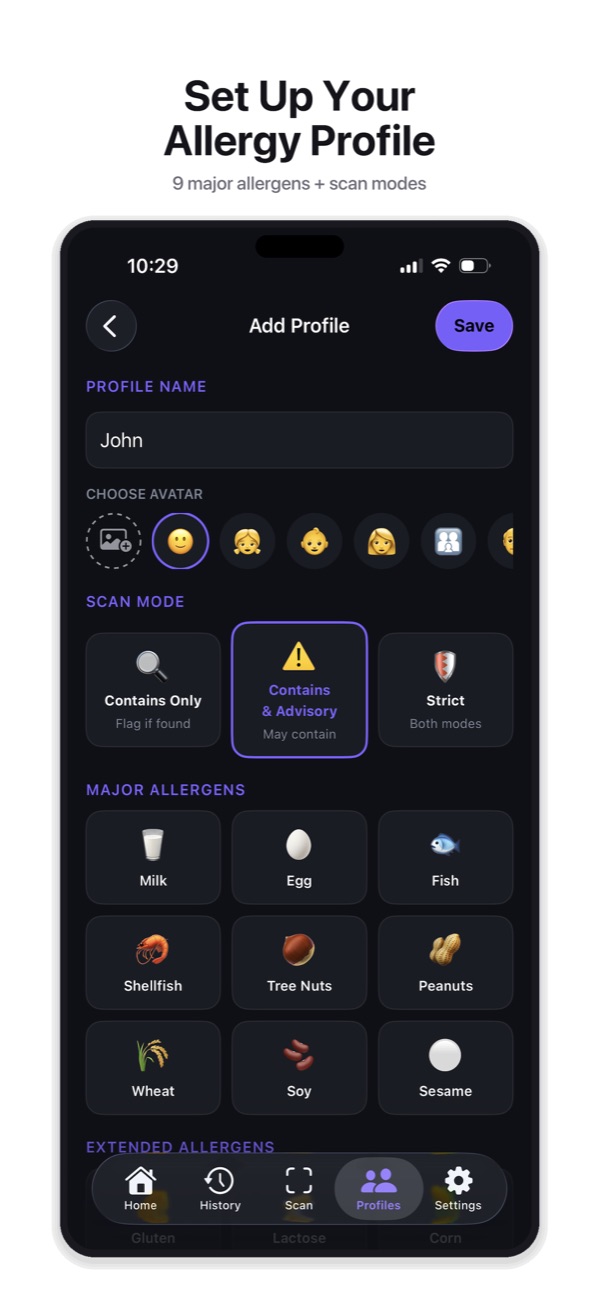
How it works
Every ingredient on the label is matched against SafeScan’s allergen ontology, a dictionary of more than 1,000 synonym mappings. It covers:
- Direct names: milk, butter, cheese, yogurt
- Derived ingredients: whey, casein, lactalbumin
- Scientific names: arachis oil for peanut
- Regional names: groundnut, benne seeds, gingelly oil
- Hidden sources: ingredients like Worcestershire sauce that often contain fish
Explained, not just flagged
Each match tells you which allergen it belongs to and where on the label it was found, so you can check the reasoning yourself. Tap an ingredient to see an explanation.
Fewer false alarms
Some names sound like an allergen but aren’t one. SafeScan’s dictionary includes exceptions for ingredients like cocoa butter, cream of tartar, coconut milk, oat milk, oyster mushroom and water chestnut, so you’re not warned about milk or shellfish that isn’t there.
Try it on any ingredient list with our free allergen ingredient checker.
Related guides
Hidden names for milk on ingredient labels
Whey, casein, ghee and the false alarms to ignore.
Hidden names for egg on ingredient labels
Albumin, lysozyme, meringue and other egg names.
Hidden names for wheat on ingredient labels
Spelt, semolina, farro and other forms of wheat.
Hidden names for soy on ingredient labels
Edamame, miso, TVP and soy lecithin.
Frequently asked questions
Why would an allergen have another name?
Many ingredients are made from an allergen without naming it, such as whey and casein from milk or albumin from egg. US law requires the allergen source to be declared on most packaged foods, but foods that aren't covered, imported foods and labels you read in a hurry are where these names matter.
Does SafeScan avoid false alarms?
It tries to. Names like cocoa butter, cream of tartar and coconut milk contain an allergen word but don't come from that allergen, and SafeScan's dictionary excludes them.
What if SafeScan misses an ingredient?
This can happen if an ingredient is listed under an uncommon name that isn't in the dictionary yet. Always read the physical label, and report the product to support@arshtechpro.com so we can improve the allergen mapping.
More SafeScan features
Barcode and ingredient label scanner
Scan a food barcode, or photograph the ingredient label when there's no barcode. SafeScan reads the ingredients and checks them against your allergy profile.
Allergy profiles
Build an allergy profile in SafeScan with the 9 major US allergens, 11 extended allergens, 6 diets and a custom avoid list. Every scan is checked against it.
Family profiles
Create an allergy profile for each family member in SafeScan, then scan once and get a separate verdict for everyone. Built for parents and caregivers.
Scan history and favorites
SafeScan keeps every product you scan, grouped by date with its verdict. Filter by Safe, Not Safe or Needs Review, favorite trusted products and add notes.
Shareable allergy card
Turn any SafeScan profile into an allergy card listing allergens, diets and sensitivity, and send it to restaurants, schools, caregivers or friends.
Sensitivity modes
Choose Contains Only, Contains & Advisory or Strict in SafeScan to decide whether "may contain" warnings and unknown ingredients get flagged.
Dietary restrictions
SafeScan checks food for vegan, vegetarian, halal, kosher, low FODMAP and low histamine diets alongside your allergies, and explains every ingredient it flags.
Product search
Search food products by name or brand in SafeScan and see a safety verdict for your allergy profile before you go to the store, without scanning anything.
Product compare
Compare up to 4 food products side by side in SafeScan. See each verdict, flagged ingredients and warnings, and which is safer for your profile.