What "gluten-free" means on a US food label
In the US, a food labeled "gluten-free" (or "free of gluten", "without gluten", "no gluten") must contain less than 20 parts per million of gluten, and can't contain wheat, rye, barley or their crossbreeds unless processed to remove gluten. The claim is voluntary: many foods without gluten don't carry it, so you still need to read the ingredients.
The FDA definition
The FDA set the rule in August 2013 and added requirements for fermented and hydrolyzed foods in August 2020. A food can be labeled gluten-free if:
- Any unavoidable gluten is below 20 ppm, and
- It contains no ingredient that is wheat, rye, barley or a crossbreed of them, and
- It contains no ingredient made from those grains that hasn't been processed to remove gluten, and
- Any ingredient made from those grains and processed to remove gluten doesn't bring the food to 20 ppm or more.
Foods that are naturally gluten-free, like eggs, fruit, vegetables and bottled water, can also be labeled gluten-free if any gluten they came into contact with is below 20 ppm.
What the rule doesn't do
- It's voluntary. A product without gluten doesn't have to say so. The absence of a gluten-free claim doesn't mean a product contains gluten.
- Gluten isn't a major allergen. Wheat must be declared, but rye and barley don't have to be called out in a Contains statement. Read the ingredient list for them, and for malt, which is usually made from barley.
- It doesn't certify a facility. The claim is about the food, not about how it was made.
Gluten vs wheat
Gluten is a mix of proteins found in wheat, rye, barley and their crossbreeds. A wheat allergy and celiac disease are different conditions, and the foods each needs to avoid overlap but aren't identical. See hidden names for wheat.
Checking gluten with SafeScan
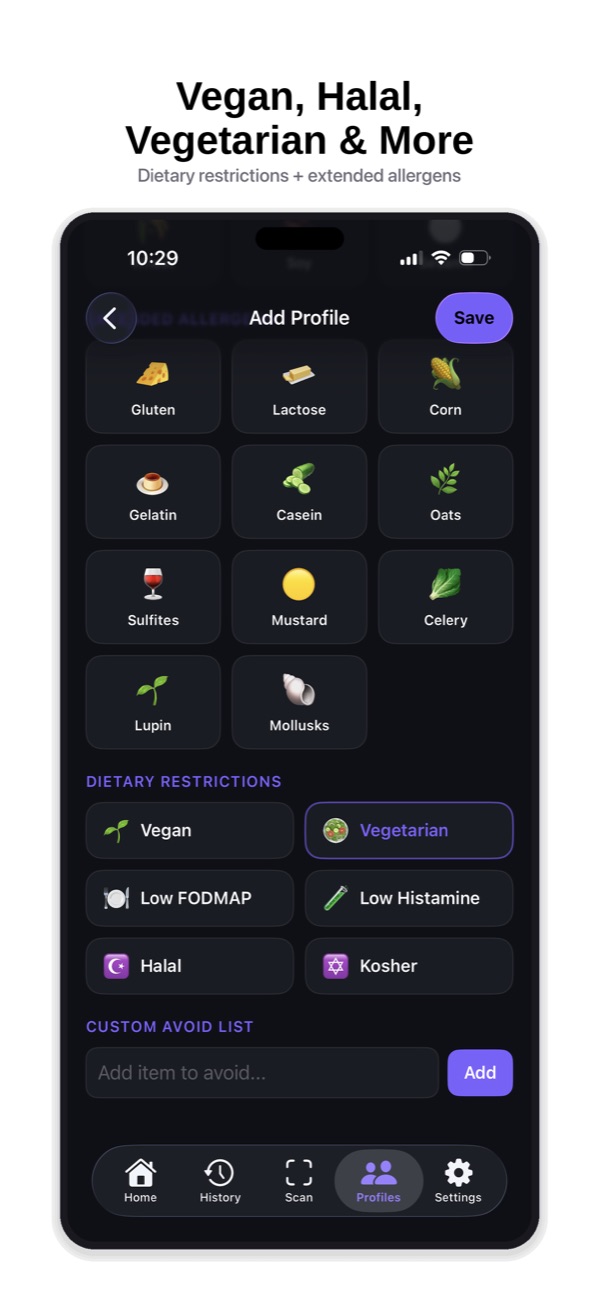
Add gluten as an extended allergen, or wheat as a major allergen, or both. SafeScan checks each scan for wheat, rye, barley, malt and their many names, and reads "gluten-free" claims separately from the ingredients.
This guide is general information based on US labeling rules, not medical advice. Talk to your doctor or allergist about your own allergies, and always read the label on the package in your hand.
Scan for gluten, wheat or both
SafeScan lists gluten as an extended allergen and wheat as a major one. Add either to your profile and every scan checks for wheat, rye, barley, malt and the less obvious names, with an explanation for each match.
Download on the App StoreFree to download for iPhone and iPad. No account needed, and your profiles and scan history stay on your device.
Frequently asked questions
Why 20 ppm and not zero?
The FDA says 20 ppm is the lowest level that can be consistently detected in foods with valid scientific methods, that most people with celiac disease can tolerate foods with very small amounts of gluten, and that the level is consistent with international standards.
Can a gluten-free food contain wheat?
Yes, in one case: an ingredient made from wheat that has been processed to remove gluten, such as some wheat starches, if the final food is under 20 ppm. Because wheat is a major allergen, it must still be declared on the label.
Is oats gluten-free?
Oats aren't one of the grains named in the FDA rule, but they're often grown and processed alongside wheat. Look for oats labeled gluten-free. SafeScan lets you track oats as an extended allergen.